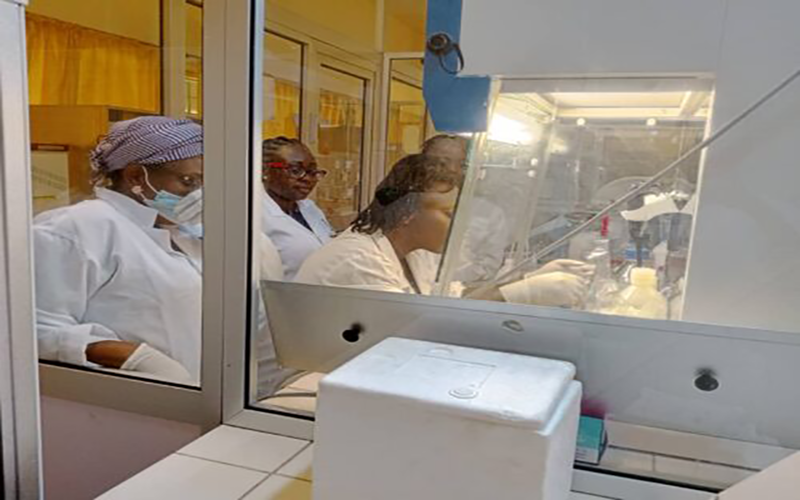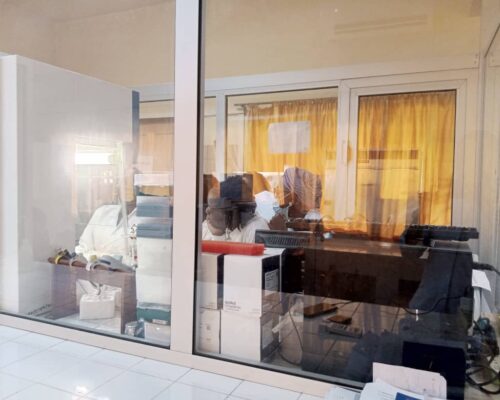
The UEGDFU of the TIDRC-CReMIT, notably addresses topics relating to neglected tropical diseases (especially dengue and other arboviruses) and common infectious diseases (such as malaria) using a transdisciplinary perspective. Despite the multiple efforts made by international organizations and national programs, tropical infectious diseases continue to be a heavy burden for vulnerable groups and constitute a significant financial burden on endemic populations.

An insectarium rearing three species of malaria vectors of different strains (laboratory) and from different locations in West Africa.
Learn More
A toxicological testing section to evaluate the effects of insecticides and plants on the mortality, life-history traits and behavior of mosquito vectors.
Learn More
A section for culturing Plasmodium falciparum, the parasite that causes malaria in Benin, and for in vitro evaluation of the efficacy of drugs and medicinal plants.
Learn More
An experimental infection section for all studies relating to malaria transmission, and in vitro evaluation of the efficacy of drugs and medicinal plants in inhibiting parasite development in vectors.
Learn More
A molecular parasitology section responsible for monitoring the resistance of Plasmodium falciparum isolates to antimalarial drugs and determining the genetic diversity of these parasites.
Learn More
A Biochemistry and Molecular Biology section in which all biochemical and molecular biology analyses are carried out on vector and parasite models.
Learn More
A Viral and Microbial Ecology of Infectious Diseases section responsible for analyzing the microbiome and virome of malaria mosquito vectors.
Learn More
A Bioinformatics section in charge of sequencing data management and analysis.
Learn More
Located at Ganhoua (Zakpota) in southern Benin, the experimental station is used to assess the behavioral response of malaria vectors to vector control tools in a semi-controlled natural environment.
Learn MoreYou'll receive the last publication on your email box.